You crossed the line. The medal is on the shelf, the stairs are a problem, and somebody has already asked “so what’s next?”
The honest answer for the next two weeks is: not much, on purpose. A marathon leaves sore muscles, tired tendons and a tired nervous system, and a good part of that doesn’t show up as pain. The plan below is how we’d spend the first 14 days: walk first, run easy later, and save anything hard for after that.

The short version
- Days 1–3: walk, eat, sleep. No running.
- Days 4–7: short walks, and if your legs agree, a few one-minute jogs inside a walk.
- Week 2: three short easy runs, 20–35 minutes, with a rest day between them. A few relaxed strides at most.
- After day 14: back to normal easy running. Workouts and long runs come back gradually over the following weeks.
If something hurts in one spot rather than everywhere, skip ahead to the warning signs.
Why two weeks, when your legs feel fine on day five?
Muscle soreness after a marathon usually peaks a day or two after the race and fades within a few days. That is the part you can feel. The rest takes longer: small muscle damage keeps repairing after the soreness is gone, tendons and bones have taken thousands of impacts, and your sleep and appetite often stay a bit off for a week or more.
That’s why “I feel fine, so I’ll do my usual Tuesday intervals” is the most common mistake of the recovery weeks. Feeling fine is the first sign of recovery, not the last one.
You’ll also hear the old rule of “one easy day per mile raced”, which for a marathon means about 26 days without hard running. It’s a rule of thumb, not science, but it points the right way: the full return to hard training takes weeks, not days.
Week 1: unwind
The job of week one is movement without load. Blood flow helps; impact doesn’t yet.
- Days 1–3. Walk every day, even if it’s slow and short. 20–30 minutes around the block counts. Eat properly, including protein and carbs; many runners under-eat after a race because the goal is gone. Sleep as much as you can.
- Days 4–7. Keep walking. If walking feels normal again, try a short walk with a few jogs in it: for example, 5 minutes walking, then 4 × (1 minute of very easy jogging + 2 minutes walking), then 5 minutes walking. That’s not a workout. It’s a check-in: how do your legs answer?
- Cycling or swimming at an easy effort are fine if you enjoy them. They are optional.
If the jog minutes feel awkward or painful, stop them and walk. Try again in two days.
Week 2: re-enter
Now a little structure comes back, still with nothing above easy.
- Three runs, 20–35 minutes each, with a rest day between them. Conversational pace: you can talk in full sentences. If you use heart rate, stay in zone 2 or lower.
- One of them can end with 4 relaxed strides: 15–20 seconds of quick, smooth running, with a full walk back between them. They wake your legs up without asking anything of them.
- The last run of the week can be a bit longer, around 35 minutes, still easy.
A good test for the end of week two: your legs feel like yours again, stairs are boring, and an easy run feels easy. If that’s not there yet, stay in week two for a few more days. Nobody hands out points for returning fast.
After day 14: getting back to training
From week three, most runners go back to their normal easy weeks. Bring back one thing at a time:
- Volume first. Your usual number of easy runs.
- Then a long run, shorter than your peak marathon long runs.
- Then workouts, starting with something gentle like strides or a short fartlek, before tempo or intervals.
If you are planning another race soon, like a half in six weeks, keep this order and give yourself at least two or three weeks of normal easy running before the first real workout. If the next goal is spring, there’s no rush at all: a few weeks of relaxed, unstructured running is a good thing between two training blocks.
Soreness or something else?
General soreness is expected: both legs, big muscles, worse on stairs, better every day.
These are not normal soreness, and are a reason to stop running and get checked:
- pain in one spot of a bone (shin, foot, hip) that hurts when you press on it, or when you walk or hop,
- pain that gets worse from day to day instead of better,
- swelling, or a joint that feels unstable,
- dark urine, very little urine, or feeling unwell and weak for more than a day or two after the race,
- chest pain, fainting or a racing heart at rest.
When in doubt, walk instead of run, and ask a doctor or physio. Training advice, not medical advice.
How iRunning helps with the two weeks
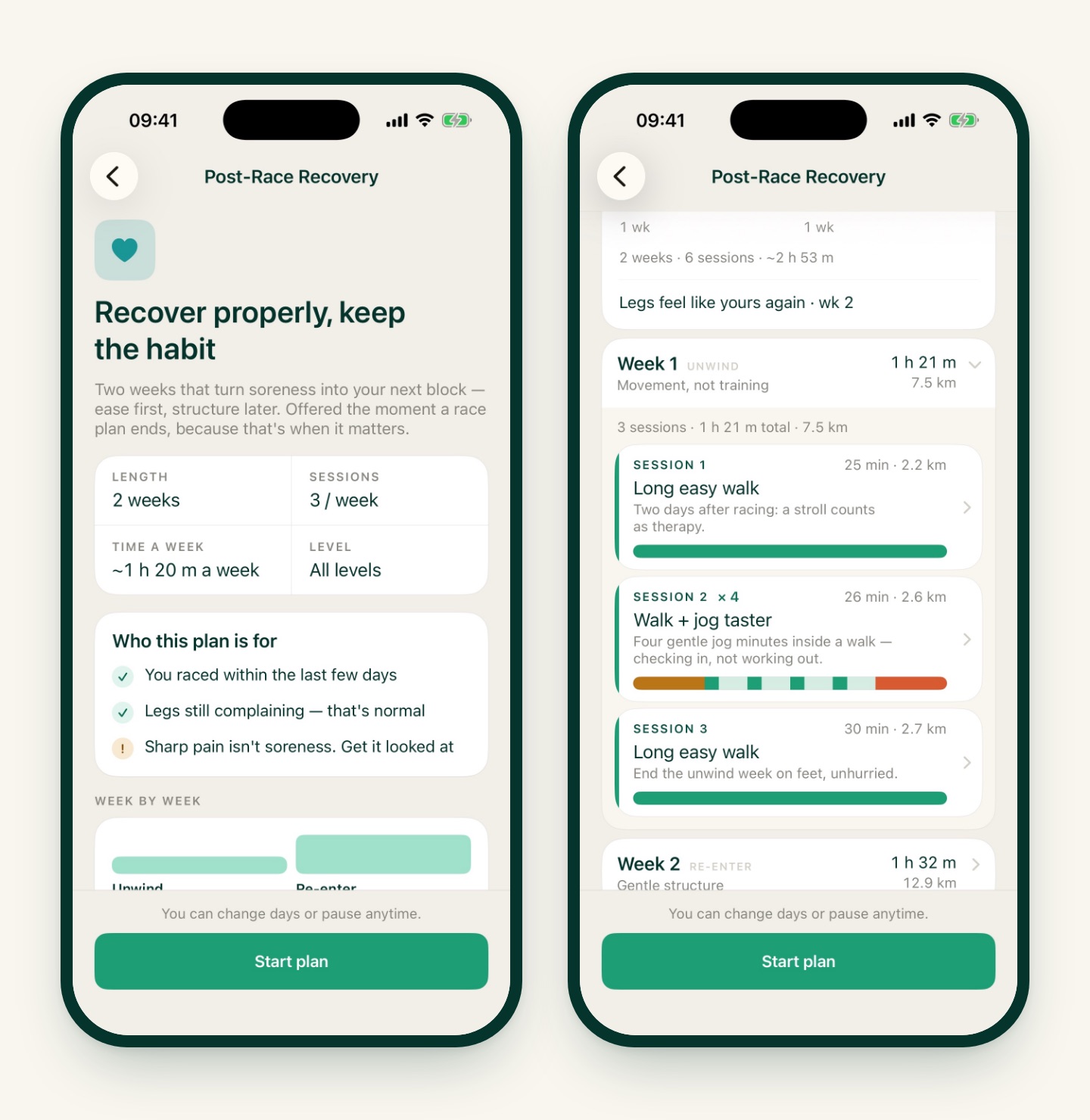
Post-Race Recovery plan. Two weeks, three sessions a week, about 1 h 20 min in total per week, and nothing above easy. Week one is walks and a walk-jog taster, week two is two short easy runs (one with four strides) and a 35-minute run. There’s a rest day between sessions. In the app it’s under Plans → Comebacks, and when a marathon or half marathon plan in iRunning finishes, the “What’s next” card suggests it first. The plan is part of iRunning Premium.
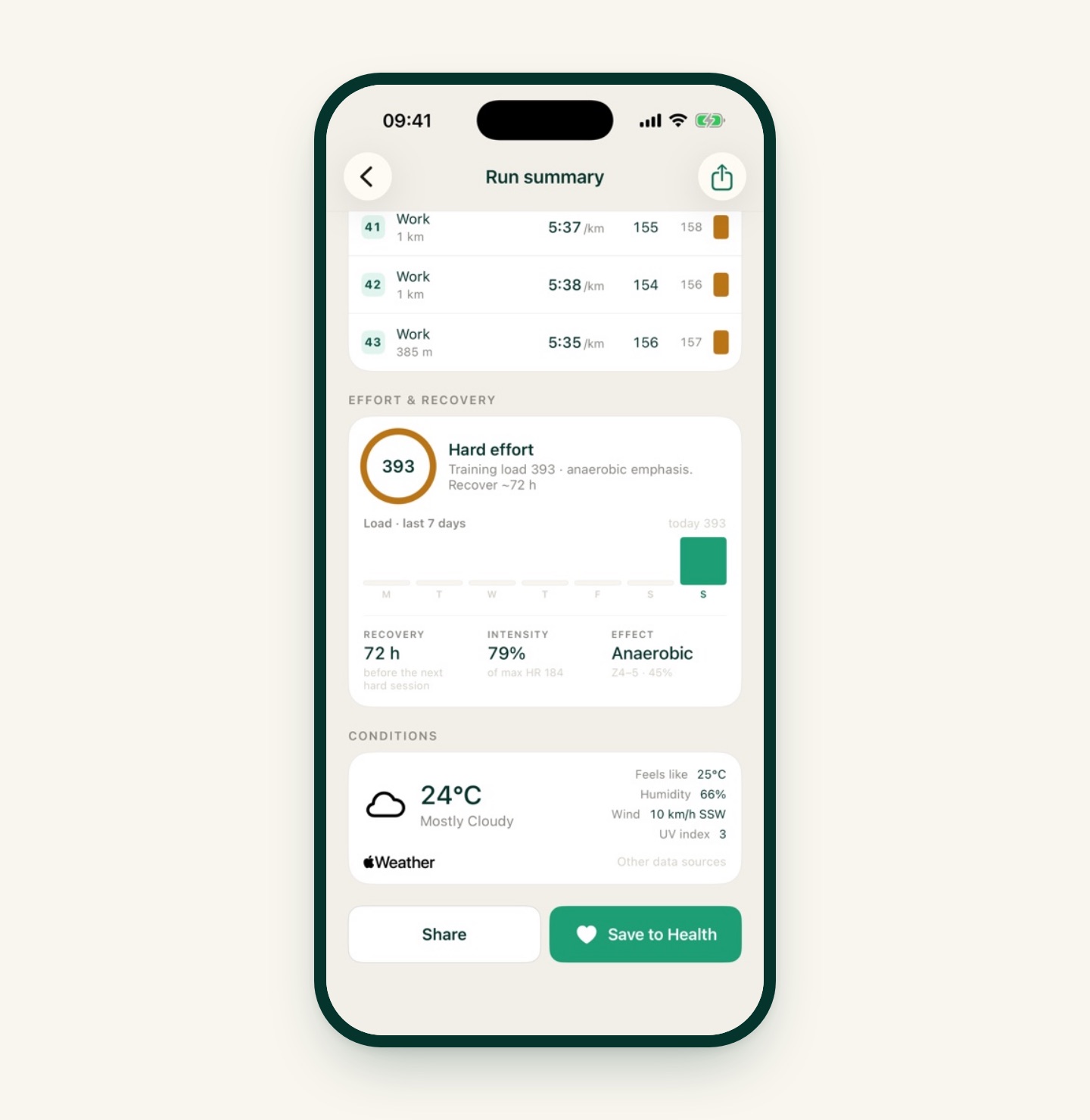
Effort & recovery card. After a run with heart-rate data, the run summary shows a training load and a recovery estimate, such as “Recover ~40 h” before the next hard session. It’s free. One honest note: the estimate is capped at 72 hours, so after a marathon it will simply show about 72 h. The race needs more than that, which is exactly why the plan above lasts two weeks.
Life happens. If week two collides with work or a cold, pause or move the sessions instead of skipping ahead.
And if you haven’t yet: turn the race into a short video of your route with Share › Video. It’s free, and it’s a nice thing to look at while you’re walking instead of running.
Recap
Two quiet weeks after a marathon are part of the training, not a break from it. Walk in week one, run easy in week two, bring the hard stuff back one piece at a time, and take pain in one spot seriously. The next goal will still be there on day 15.